
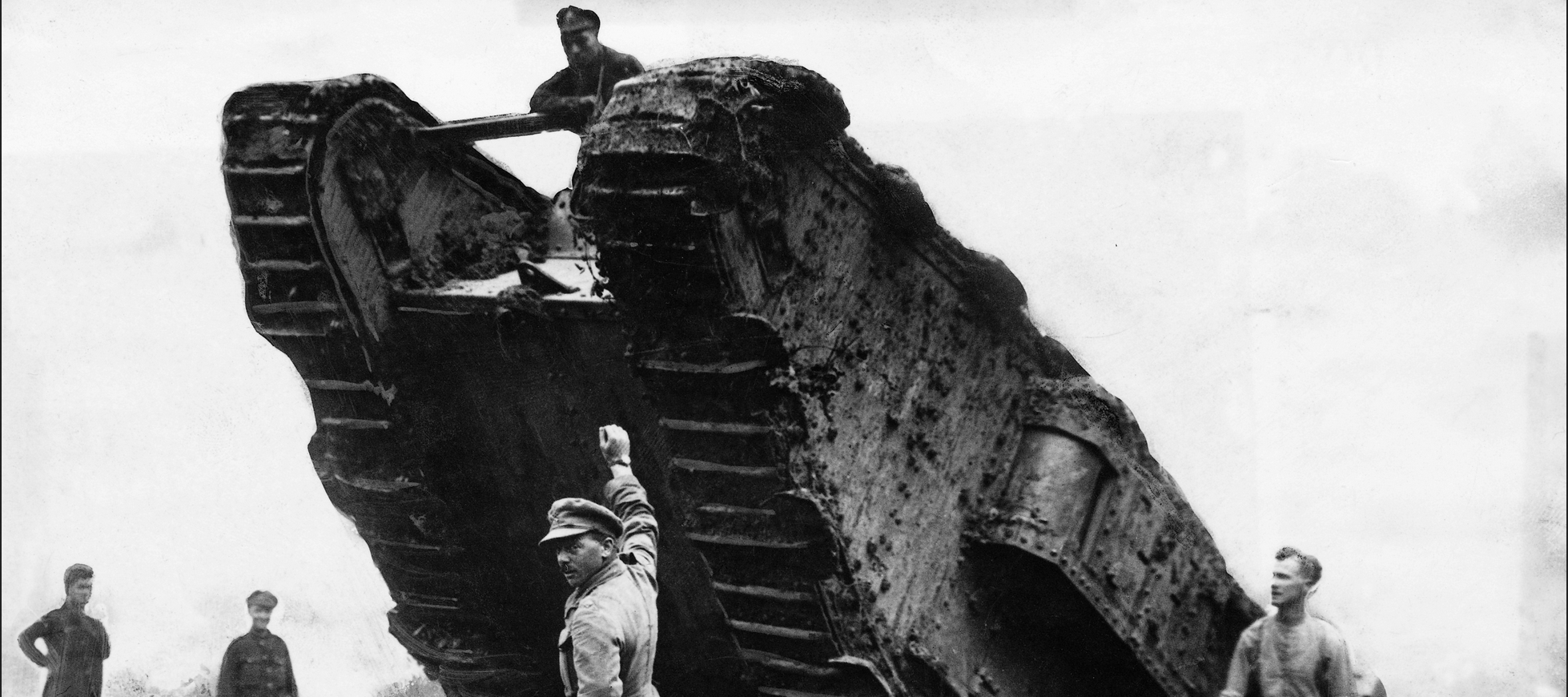
It took a navy man to finally get tanks adopted in the Great War – Churchill maneuvered to force Kitchener to consider the technology.
In the 18th century, officers in the Royal Navy were typically appointed based on seniority and merit, with promotions often occurring when vacancies arose due to retirement or death. In the British Army, officers were usually from the upper classes and were appointed through purchase or patronage, reflecting the social stratification of the time.
The Royal Navy ran two parallel streams of stratification: the formal rank system and the societal tag of being classed as a “gentleman”. It was only the latter who were able to reach flag ranks. However the Navy has long had a tradition of respect for service – you generally had to turn up and fight to get ahead.
The Navy tended to be more open to new ideas than the Army – you can get away with a lot at sea as some inbred halfwit from Harrow is less likely to turn up. But to be fair it often took a long time for an innovation to make it beyond a single command – that required the support of head office, and that was the realm of the upper classes.
The Navy has also had a long tradition of respect for practical skills. You were alongside your crew, not in a commandeered manor house miles away from the front line. They saw how you operated close up, and if you wanted respect you learned to interact, and most important of all, respect your warrant officers who made things happen. It’s difficult to hide on a ship.
While colonial exploits and industrial culture made some dents in how army officers were selected, the Great War demonstrated the tragedy of a calcified promotion system. Officers, far from the front line, commanding men to walk toward walls of lead. If you were Infantry on the Western Front, your survival was comparable to that of the Crimean War 50 years earlier. Tactics hadn’t changed despite improvements in artillery and the invention of machine guns.
When the United States joined the war against fascism (WW2) in 1942 they were understandably nervous about accepting British control of the European theater. US troops during The Great War (WW1) had witnessed first hand what could go wrong when officers regarded their men as some sort of lesser species. US Supreme command in Europe was a condition of support.
All bureaucracies become resistant to change, even the ones lauded for innovation. Remember the hype stories of 3M? From one product – the Post-It(TM) note. Do they really have a culture of innovation? Or was it a passing phase? And Motorola, who lost domination of the cellphone market in the 90’s because their engineers didn’t grasp that voice call quality wasn’t the only thing people wanted in a mobile phone.
The military is understandably at the more conservative end of the spectrum: when your life depends on it working the first time, you tend to stick with things you know. Defence procurement has always been a nightmare. Samuel Pepys is called the saviour of the British Navy mainly because of his work to tackle corruption, nepotism and the incompetence of upper class half-wits, not in the fighting Navy, but logistics and supply.
This long tradition of graft creates a hypersensitive context, and results in arduous procurement processes that ultimately stifle innovation, without seeming to fix the problem. And that’s why senior military personnel need wars.
The thing that breaks the log-jam preventing new ideas getting to the front line is conflict. In wartime the accountants get steamrollered out of the way, and operational leaders take over. Russia’s inexplicable attack on Ukraine has probably done more for drone development since 2022 than the previous twenty years. We have learned (as the US did in Afghanistan) that simple, cheap weapons can be remarkably effective with smart tactical deployment.
We have also learned that the US is no longer a role model for leadership. In the last six months, Mr. Trump has systematically gutted the senior ranks of the US military, most worryingly the office of the Judge Advocates General. These are the lawyers who decide what is a lawful order. They rule on the validity of an instruction from the ‘Commander in Chief’.
He has created conflict where there was none. It’s his excuse for overriding institutional safeguards. The US economy was world beating when he took over – Mr Bidens’ team had done well in trying circumstances to recover from the legacy of Mr Trumps botched handling of Covid. But the new commander manufactured disaster, and a possibly cognitively impaired population1 sucked it up.
Imagine if that commander were:
-
Demonstrably incompetent as a businessman (he has lost 70% of what he inherited)
-
An adjudicated sex offender
-
Suffering from cognitive decline (his father died from dementia)
-
A pathological liar
-
A traitor (assisted by Russia to win the 2016 election)…
What could possibly go wrong?
It’s straight out of the autocrat playbook, and a licence for corruption.
I desperately want to find something positive nowadays, and sometimes you just have to watch the intellectually challenged as the disaster they create unfolds. So, lessons?
-
Merit based advancement works. The small of mind can only fight back through bullying and coercion, as we are seeing. So controls must be built in at an institutional level to prevent creep toward incompetence. When the US declared independence they were resisting autocracy. Today the US is looking more and more like England in 1793.
-
Despite this, never waste a good disaster. Bureaucracies calcify over time, especially in a social media driven context. Humans are terrible at evaluating risk, and tend to knee-jerk. Politicians feel they must do something so we end up with some dreadful outcomes (three strikes being a New Zealand example). Disasters are a great opportunity for a purge, but all too often are wasted.
Courage seems to be what we are missing, and not just that of our leaders: we are bringing this on ourselves.
Evidence is increasingly emerging that those who contracted Covid (which of course favours the vaccine hesitant) show a significant increase in New Onset Dementia among older adults. Severe cases of Covid are associate with a 3-9 point drop in IQ. If you are listening to an old friend regurgitating conspiracy theories and wondering if they’ve suffered some form of brain damage, the answer is they probably have.