
I think we all grasp the importance of engagement judging by how often ‘passionate about’ and other superlatives appear on LinkedIn. It is critical to resilience, satisfaction and progress. We need to be striving to continually make ourselves and our world a better place. Otherwise, what’s the point?
This carries through into the quality of work. Every now and again we stumble upon across a real craft worker, someone who simply does a great job. Isn’t it a pleasure to watch someone like that, however apparently insignificant their job might be?
And we also notice when they don’t. Many inconveniences and catastrophes are caused by a lack of engagement, whether it be a momentary lapse of judgement or long term non-performance.
Training and professionalism (including associations) can help – they provide benchmarks, standards, development and above all else culture. But let’s face it, whether we are looking at leaky buildings (caused by professionals) or failures of financial audits (more professionals) or a building pancaking (another professional) misaligned incentives and poor ethics combine to drive harm.
There’s a theory that any problem can be explained using a two by two grid, so here’s a way to think about this risk and compliance challenge. My axes are two C’s:
-
Are they competent?
-
Do they care?
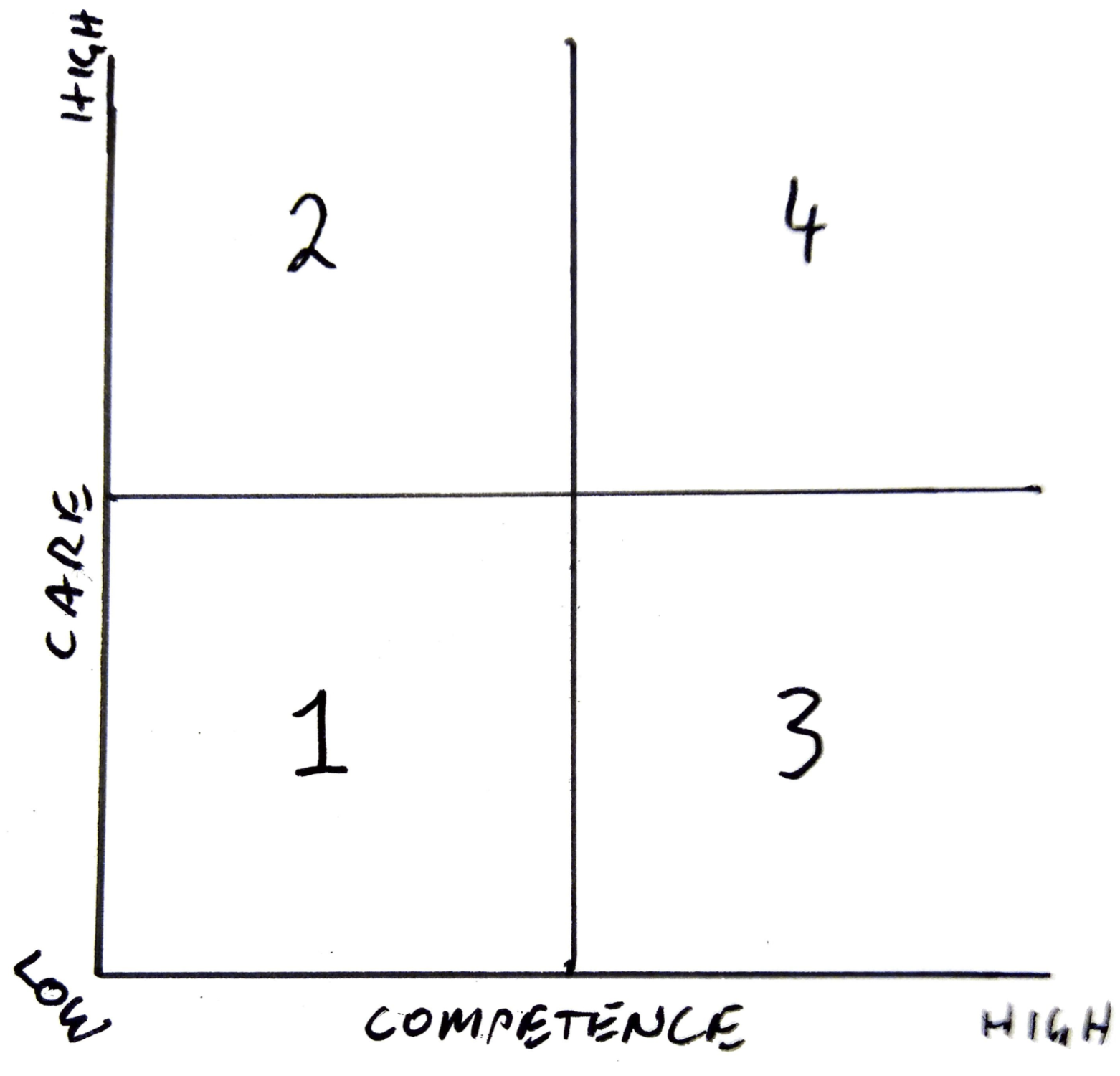
Obviously we avoid Quadrant 1: incompetent and uncaring. They’re usually fairly easy to spot, although they can hide behind the letters after their name.
We all want Q4 – that’s the craft worker. They know what they are doing, and they have an intrinsic desire to do it well. Their satisfaction almost certainly comes from pride and pleasure in their work, not just the money. The admiration of Ashley Bloomfield is probably because we’ve become unaccustomed to seeing caring competence. In fact there are a bunch of cynics who seem to think that they cannot exist together.
Q3 is the danger zone. You hire someone with genuine skill, but they don’t care. I think we’ve all got a plumbing story. Theoretically you just need to find the right incentives… but if they fundamentally don’t care much, if it really is just about the money, then the potential for a misfire occurs. I would argue this is what we see all too often in the financial services sector. Jobs have been boiled away, systemised and automated to such a degree that there is no craft left: a bunch of senior leaders thought that care could be driven by money (which was basically Thatcher’s point – how’s that working out?)
Q2 is interesting – something that lives in here is Do It Yourself, whether it be working on your house or dealing with a legal matter. The barriers to competence are falling – every day it gets easier to access knowledge. Don’t get me wrong – some stuff is truly difficult, and genuinely needs years of learning and practice. But there are also many things that used to be valuable only because of access to special tools or knowledge. So we need to treat this segment with respect: nobody cares about your family, your friends and your stuff like you do.
Regulators need to be careful: many (most?) fail to grasp that by supporting someone through a regulatory process you end up with a citizen who will become engaged. Tax departments have spent many years developing education and simplifying processes to let people do it right themselves, and it’s no coincidence that they are viewed as one of the most competent and trustworthy government agencies globally.
Equally, regulators and professional bodies need to be seen to punish negligence among those who should know better: sanctions must be tougher on professionals than on an amateur who gave it a good try but failed. After all, a common response to a system failure (e.g. leaky buildings) is to impose regulation or certification, with which should come greater responsibility.
The problem with professionalising a sector or skill is that while it tackles competence, it is much harder to apply standards for pride-in-the-job. There are various ways of measuring competence, but it is very, very hard to measure care and commitment.
One useful tool (with some obvious exceptions) is to protect the right of the individual to act on their own behalf. Allowing people to do things for themselves sets a standard: we can take back a job that we feel it isn’t being carried out correctly, and it protects us from abuse of a competitive position conferred by illusory assurance measures such as registration rules. I conveyanced my own house in the UK – a ten day process end to end and frankly bugger all effort.
So don’t be afraid to learn more about that thing you need to do and question the professionals. Nobody cares about your stuff like you do, and true craft workers will appreciate the engagement and interest.